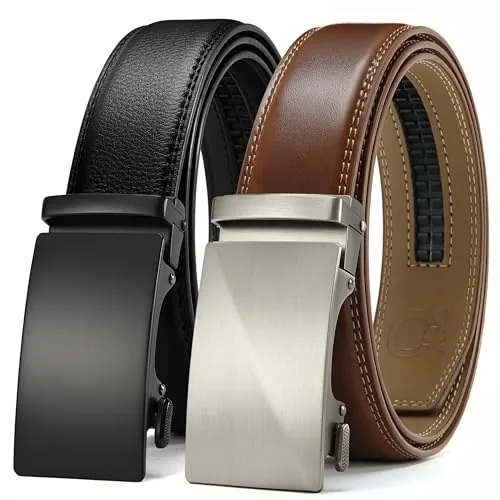
Ratchet
Leather Ratchet Belt, 35 mm (Black, 36″ to 42″ waist, brushed buckle)
leather
4.7 out of 5 · 14,147 ratings$19.98
Belts are the one thing in a wardrobe where the number on the label and the number in your head are measuring different places. Here is the gap, and how to close it.
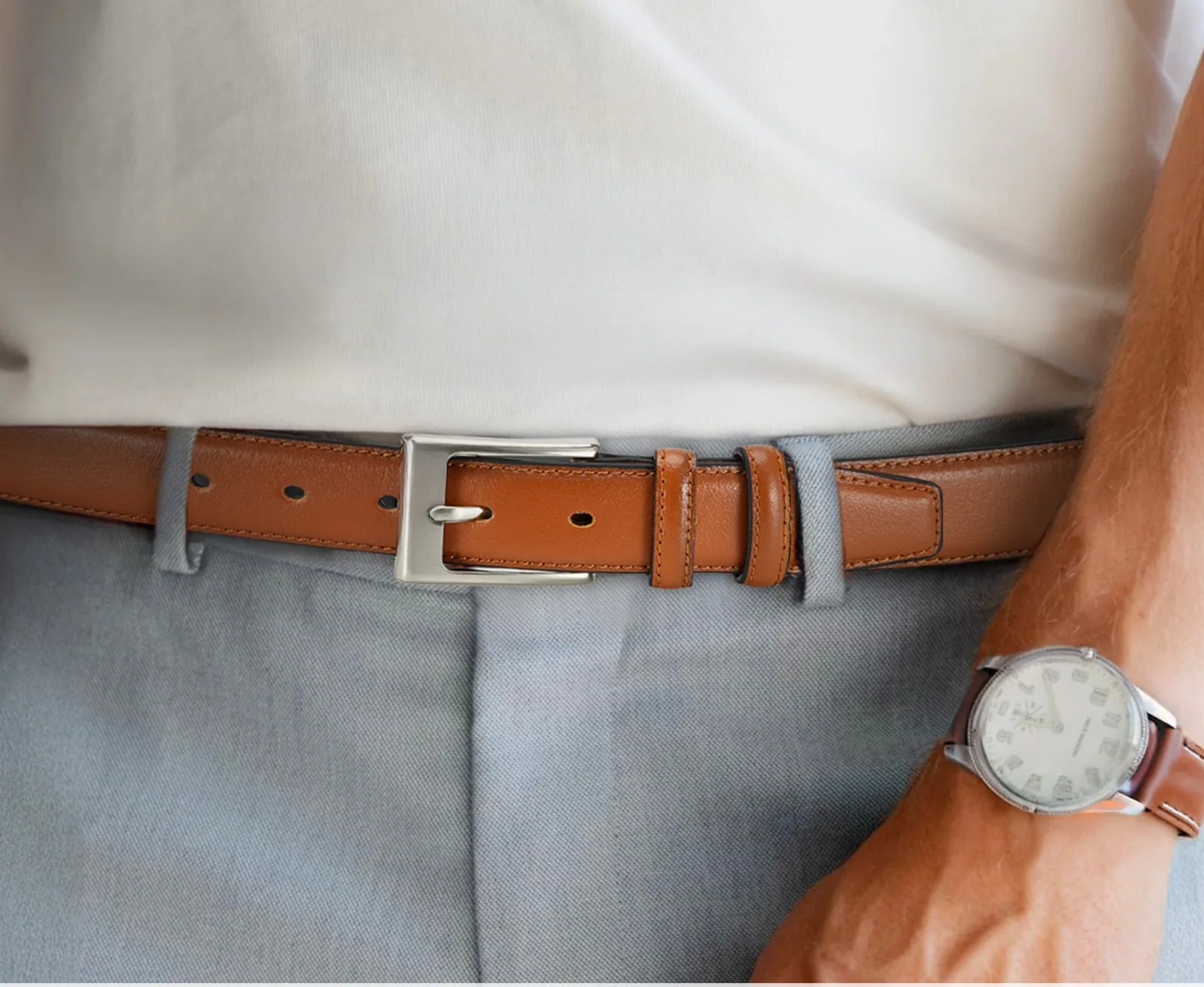
Somebody who wears 34 trousers buys a 34 belt, and about a third of the time it does not reach. This is not a manufacturing problem. The two numbers are measuring different circles.
A trouser waist is measured flat at the button. A belt is measured to the middle hole, round the outside of the trousers, through the loops, over a shirt tucked into them. That path is longer, and by a predictable amount.
The old trade rule is to add two inches to your trouser size. It is a rule of thumb and it holds up better than most. The extra path length comes from the same three things on almost everybody: the thickness of the waistband, the shirt tucked under it, and a belt sitting below the natural waist rather than on it.
Where it breaks down is at the ends. Somebody very slim sits closer to plus one. Somebody carrying weight at the front sits closer to plus three, because the belt path bulges further from the body.
A punched belt has five or seven holes, which is five or seven answers. A ratchet strap has a track of teeth about a fifth of an inch apart, and the strap gets cut to your waist before the first wearing.
So the number the maker publishes is not a size, it is a window. A belt described as covering 32 to 38 inches is a strap long enough for a 38-inch waist that can be cut down as far as 32. Buy inside the window and you can make it fit exactly. Buy outside it and no amount of trimming helps in one direction, and there is nothing to trim in the other.
Counted from what is in stock as this page was built, department by department.
| Department | Belts | Waist covered | Widths | From |
|---|---|---|---|---|
| Ratchet Belts | 65 | 26″ to 52″ | 32 mm, 35 mm, 38 mm | $6.83 |
| Tactical & Work Belts | 38 | 26″ to 48″ | 32 mm, 38 mm | $7.49 |
| Stretch & Webbing Belts | 55 | 26″ to 52″ | 28 mm, 35 mm, 38 mm | $7.99 |
| Reversible Belts | 8 | 32″ to 38″ | 32 mm | $5.99 |
| Dress & Pin Belts | 22 | 32″ to 37″ | 35 mm | $4.99 |
| Boys' Belts | 25 | 16″ to 32″ | 28 mm, 32 mm | $4.99 |
| Straps & Buckles | 18 | 32″ to 42″ | 32 mm, 35 mm, 38 mm, 40 mm | $9.49 |
Two things are visible in that table that no product page shows. The first is that the windows do not all start in the same place: the youth department stops well below the adult one, and the adult departments do not all reach the same maximum. The second is that width and department are linked, because a wider strap needs a wider buckle and not every mechanism is made in every width.
Most people do not own a tailor's tape, and a steel rule does not go round a body. Two workarounds that give the same answer:
The second method is the one worth doing if you are between two windows. The difference between a waist standing and the same waist in a chair is about an inch, and an inch is exactly the amount that decides whether a belt is comfortable at a desk.
The second number on the card, and the one that gets ignored until a belt will not thread. Trouser loops are cut for a width, and formal trousers are cut narrow.
| Width | What it is for | Belts | Departments | From |
|---|---|---|---|---|
| 28 mm | youth waists and fine dress straps | 7 | 2 | $13.49 |
| 32 mm | slim dress trousers and youth sizes | 32 | 5 | $4.99 |
| 35 mm | the formal width, and it also passes jeans loops | 63 | 4 | $6.83 |
| 38 mm | jeans, workwear and anything that carries weight | 44 | 4 | $7.99 |
| 40 mm | wide work loops and replacement buckles | 7 | 1 | $9.49 |
The practical summary is short. 35 mm goes with dress trousers and with jeans. 38 mm goes with jeans and workwear and will fight the loops on a suit. Under 32 mm is youth sizing or a deliberately fine dress belt.
Sizing a ratchet belt ends with scissors, and that is the step people put off. It takes five minutes and it is genuinely irreversible in one direction only.
The mistake worth making is leaving an inch too much. A strap can be shortened a second time, and nothing shortens back. If the belt is a present, leave it uncut and let the person it is for do this step: the whole point of the window is that it fits somebody specific, and only they know where the buckle should sit.
Most adults move two or three inches in a year without noticing, and a belt is where they notice. What happens next depends entirely on the mechanism.
A punched belt has one hole that is right and two either side that are almost right. Move two inches and the belt is fastening on its first or last hole, which is the point at which the buckle sits crooked and the tail is either flapping or too short to reach the keeper.
A ratchet strap absorbs the same two inches without anything visible changing, because the teeth are a fifth of an inch apart and the strap was cut with the window in mind. That is the argument for the mechanism stated plainly, and it is a stronger argument than the convenience one.
The limit is the cut. A strap trimmed hard for a 32-inch waist will not go back to 38, so somebody expecting to move should cut conservatively and live with a slightly longer tail.
A belt is a common present and a difficult one, because the number you would need to ask for is the one nobody knows about themselves.
A punched belt that fastens on the last hole pulls the buckle round to one side. It is a sign the belt is a size short rather than a sign of anything else, and it is the one fit fault that photographs badly.
On a punched belt the tail should reach the first loop past the buckle and stop. A tail that reaches the hip means the belt is a size or two long, and a keeper loop is a patch rather than a fix.
Usually a width problem rather than a length one. A narrow strap in wide loops has room to travel, and it travels upwards as the trousers settle.
The exact problem a ratchet belt was designed for, and the reason the fifth-of-an-inch step exists at all. On a punched belt there is nothing to do about it except go one hole out and accept the buckle sitting loose.
Sizing is not regulated. Material is, and the same card carries both, so it is worth knowing which half is a promise.
It is unfair or deceptive to use the unqualified term “leather” or other unqualified terms suggestive of leather to describe industry products unless the industry product so described is composed in all substantial parts of leather.
A waist window is the maker's description of what a strap can be cut to. The word before leather is a claim the maker is answerable for. Reading the second one carefully is covered in the piece on what a belt label is allowed to say.
If you take one number away from this, take the one you measured off a belt you already own. Every other number in the process is derived from it, and it is the only one that describes the path a belt actually travels rather than a body it travels around.
Where this came from
Federal Trade Commission
16 CFR Part 24, Guides for Select Leather and Imitation Leather Products
Every source above was opened and read on the date shown. Where a page says something we cannot check ourselves, we quote it and name it rather than restating it as our own.
Belts this piece is about
leather
4.7 out of 5 · 14,147 ratings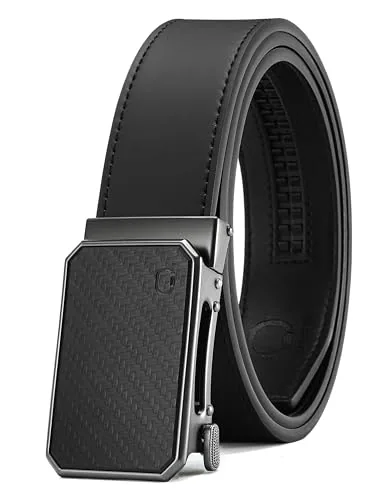
leather
4.7 out of 5 · 357 ratings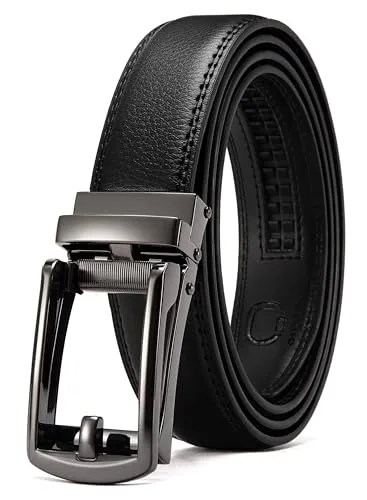
leather
4.6 out of 5 · 5,363 ratings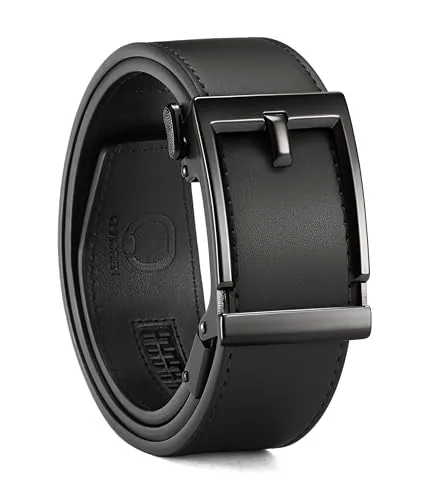
leather
4.6 out of 5 · 978 ratingsKeep reading
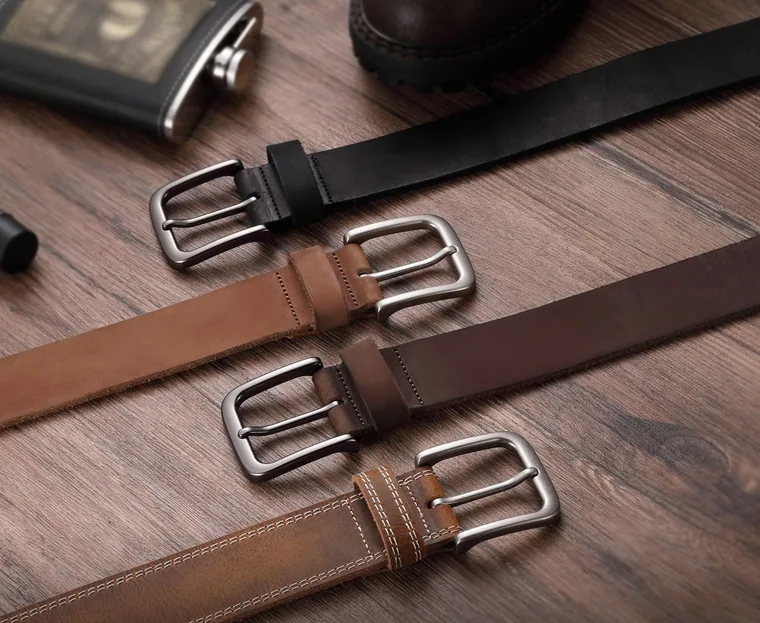
Full-grain, top-grain, genuine, bonded. Four words that sound like grades of the same thing and are not.
1,604 words
A belt a child cannot work alone is a belt that lives in a drawer. That is a design question, not a discipline one.
1,613 words